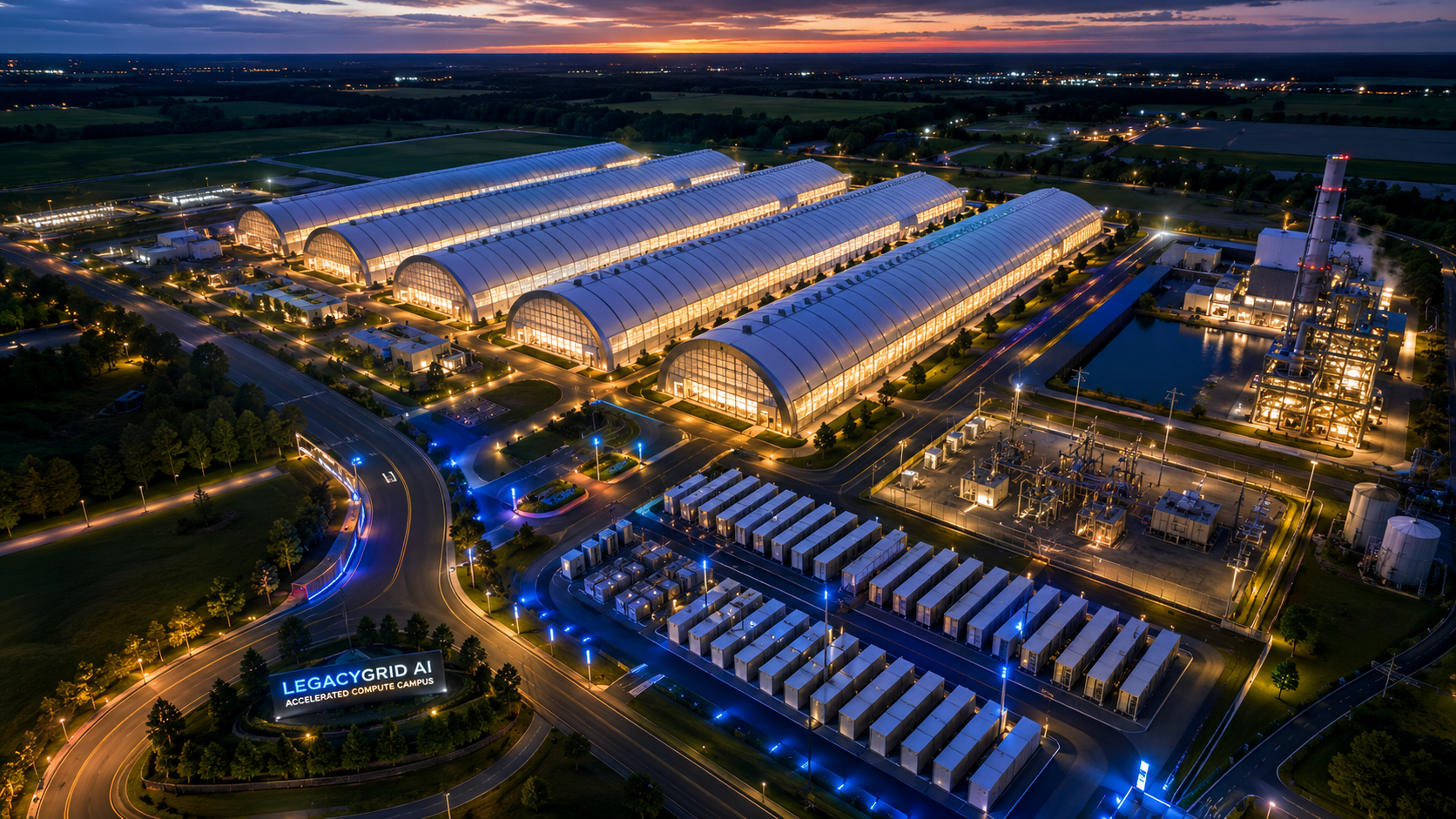
Accelerated Compute Campus
A phased pathway to AI compute capacity — engineered as an integrated infrastructure system.
LegacyGrid AI helps organizations evaluate modular compute enclosures and accelerated deployment options without separating speed from power, cooling, resilience, security, governance, and long-term campus planning.
A Coordinated Campus Architecture for Phased AI Compute Deployment
The Accelerated Compute Campus is a LegacyGrid AI systems architecture developed from the firm's work in AI Infrastructure Systems Engineering, power and grid strategy, BESS and resilience, water-conscious cooling, fiber and compute planning, owner's engineering, governance, and institutional and community benefit.
The concept begins with a systems-engineering question: can an owner create earlier, useful compute capacity without separating deployment speed from power reliability, cooling performance, security, operational readiness, lifecycle planning, and community accountability? The answer is site-specific — and that determination is exactly what LegacyGrid AI's engagement process is designed to produce.
Clarity on Company Boundaries
The Accelerated Compute Campus is an owner-side planning and advisory architecture. LegacyGrid AI is not the manufacturer, contractor, developer, operator, or engineer of record. These boundaries are not legal disclaimers added after the fact — they are the foundation of the firm's independent, owner-side value.
The Enclosure Is One Component. The System Is the Value.
Site and Deployment Envelope
- ·Site control, zoning, and civil access
- ·Grading, drainage, and flood-risk review
- ·Hazard exposure and enclosure selection
- ·Expansion zones and permanent-transition plan
Power and Resilience
- ·Utility capacity and interconnection strategy
- ·Substation, distribution, and on-site generation
- ·BESS buffering, demand management, and protection
- ·Transition from bridge power to long-term power
Compute and Network
- ·Workload definition, rack density, and cluster topology
- ·GPU and accelerator classes with storage
- ·Fiber routes, latency, and expansion cycles
- ·Cybersecurity boundaries and compute-access commitments
Cooling and Thermal Systems
- ·Direct-to-chip liquid cooling and closed-loop systems
- ·Dry coolers, CDU strategy, and heat rejection
- ·Water balance, leak detection, and heat recovery
- ·Freeze, extreme-heat, and commissioning controls
Operations and Telemetry
- ·DCIM, BMS, EMS, SCADA, and security operations
- ·Asset registry, metering, and alarm management
- ·Maintenance, spare-parts, and incident management
- ·Digital-twin integration and reporting dashboards
Governance and Community Interface
- ·Roles, decision rights, and data ownership
- ·Community-benefit agreements and workforce pathways
- ·Compute access and cost-shift protections
- ·Lifecycle commitments, exit obligations, and transparency
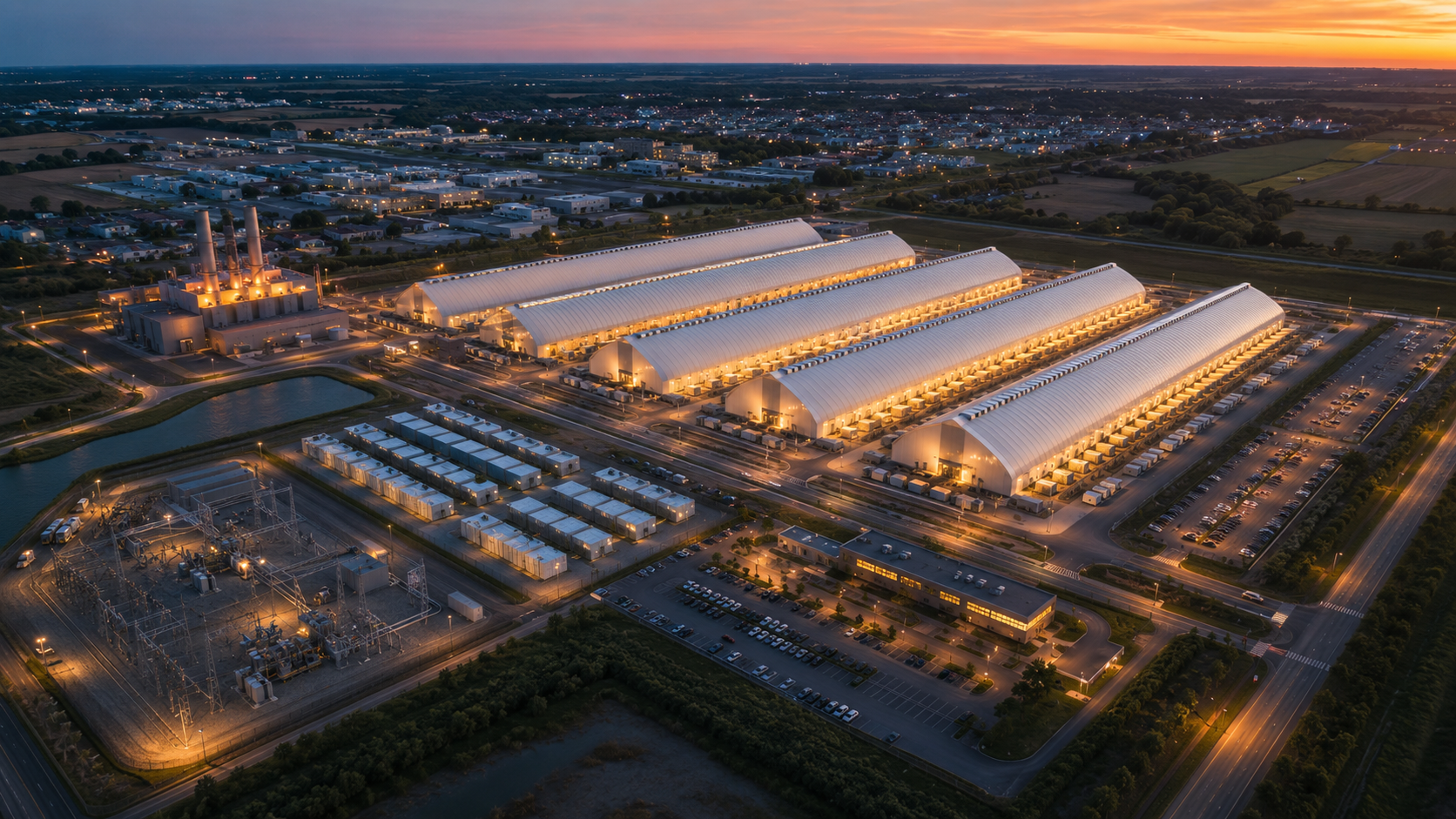
Where the Option Fits — and Where It Does Not
Seven Bounded Professional Services
Each service has a defined scope, deliverables, exclusions, and commercial structure. Expand any service below to see exactly what is included — and what is not.
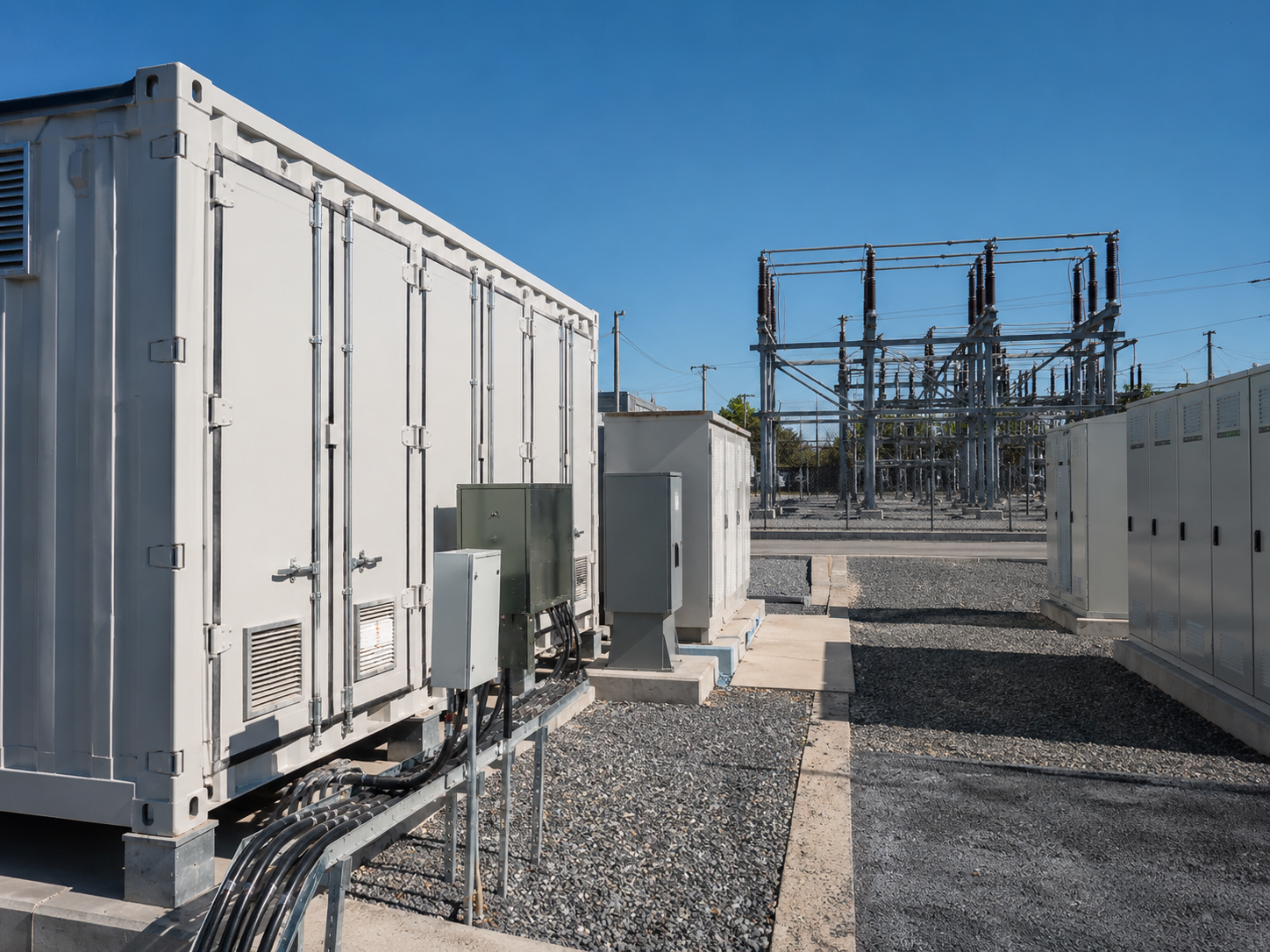
LegacyGrid AI Represents the Owner's Technical Interests
LegacyGrid AI provides advisory, planning, systems-engineering, and owner's-support services. The firm coordinates the owner-side architecture and decision process without misrepresenting responsibility for regulated design or construction.
A project may require independent structural, electrical, mechanical, fire-protection, civil, environmental, cybersecurity, and commissioning professionals. LegacyGrid AI helps the owner coordinate those relationships — not replace them.
Speed Without Lifecycle Planning Is Not a Strategy
Every ACC engagement includes lifecycle planning — conversion, relocation, permanent transition, reuse, or decommissioning — as a required element, not an afterthought. The architecture is intended to create a faster pathway to capacity, not to weaken engineering, safety, environmental, operational, or governance requirements.
Common Questions
What is an Accelerated Compute Campus?
The Accelerated Compute Campus is a LegacyGrid AI-developed phased infrastructure planning model that uses modular compute enclosures and coordinated utility systems to help organizations evaluate faster pathways to usable compute capacity. The enclosure is one component; the value is the integrated system of power, BESS, cooling, fiber, security, governance, and lifecycle planning around it.
Is it a tent data center?
No. The concept may include membrane-based, modular steel, panelized, or prefabricated enclosures, but it is not a tent product sold by LegacyGrid AI. The enclosure must be evaluated as a critical infrastructure system with defined structural, fire, thermal, and security performance criteria.
Does LegacyGrid AI build it?
No. LegacyGrid AI provides advisory, planning, systems-engineering, and owner's-support services. Final architecture, structural engineering, electrical engineering, mechanical engineering, fire protection, environmental review, permitting, construction, and commissioning must be performed by appropriately qualified and licensed parties.
Can modular enclosures shorten the schedule?
In some projects, yes — but only where the enclosure is genuinely on the critical path. In many projects, utility interconnection, substation construction, long-lead electrical equipment, cooling design, permitting, or commissioning will remain the controlling schedule. LegacyGrid AI's Opportunity Screen determines which condition applies before the owner commits capital.
What remains long lead regardless of enclosure type?
Utility interconnection, substation and switchgear, BESS, cooling equipment, fiber, network hardware, and commissioning can all remain long-lead. A credible schedule analysis must account for all of these, not only the building envelope.
Can the campus use BESS?
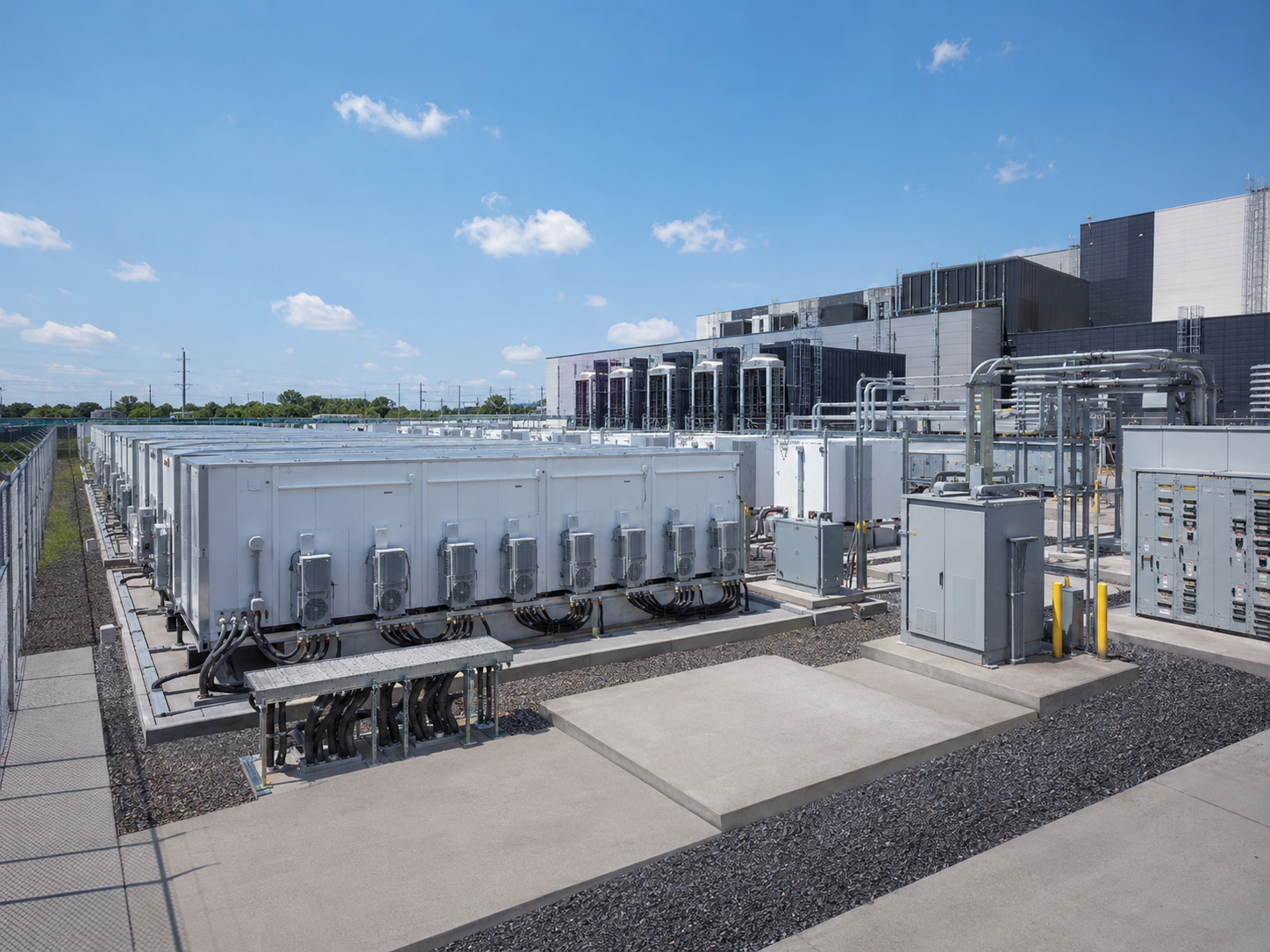
Yes. BESS is a core layer of the architecture, evaluated for buffering, resilience, transition, demand management, and any reserve obligations. BESS integration requires engineering, utility coordination, and contractual clarity — it is not a default or automatic feature.
Can it use closed-loop liquid cooling?
Yes. Closed-loop liquid cooling, direct-to-chip systems, dry coolers, and other site-appropriate heat-rejection strategies are evaluated as part of the cooling and thermal systems layer. Water balance, leak detection, and heat recovery are included in the assessment.
Is it permanent?
The campus may include permanent support buildings, utility yards, and substations alongside modular or relocatable enclosures. Lifecycle planning — including conversion, relocation, permanent transition, reuse, or decommissioning — is a required element of every ACC engagement.
What professional approvals are required?
A project may require structural, electrical, mechanical, fire-protection, civil, environmental, geotechnical, cybersecurity, and commissioning professionals. LegacyGrid AI coordinates the owner-side architecture and decision process without misrepresenting responsibility for regulated design or construction.
Is it EDC Certified™?
ACC and EDC Certified™ are two distinct LegacyGrid AI programs. ACC is a design and deployment framework for accelerated compute infrastructure. EDC Certified™ is LegacyGrid AI’s owner-side certification standard for evaluating and documenting data center efficiency, resilience, and governance performance — governed and issued by LegacyGrid AI. A completed ACC deployment may be assessed and certified under EDC Certified™. The two programs are complementary: ACC defines how a campus is built; EDC Certified™ documents how it performs.
What does the Opportunity Screen include?
The Opportunity Screen is a focused 2–4 week assessment that evaluates compute demand, site and power conditions, enclosure fit, critical-path analysis, cooling and fiber requirements, governance readiness, and lifecycle considerations. It ends with a documented go/no-go recommendation — not a construction authorization.
The Opportunity Screen Is the Right First Step
A focused 2–4 week assessment that determines whether an accelerated modular campus deserves deeper study — before any capital commitment.
Professional Practice Notice: LegacyGrid AI provides advisory, planning, assessment, systems-engineering, and owner's-support services. Final architecture, structural engineering, electrical engineering, mechanical engineering, fire protection, environmental review, code compliance, permitting, construction, installation, commissioning execution, operations, and professional approvals must be performed by appropriately qualified and licensed parties. Schedule, cost, capacity, water, energy, resilience, and performance outcomes are site-specific and are not guaranteed. The working name "Accelerated Compute Campus" is subject to trademark clearance and counsel review. All conceptual visualizations on this page are not completed or approved LegacyGrid AI projects.