Evidence to review
Site control, existing campus uses, priority loads, community priorities, workforce contextLegacyGrid AI | Campus and Community Infrastructure Intelligence
From Grid Connection to Campus Resilience.
Turn proposed data-center demand into an infrastructure plan people can understand, test, and refine.
Plan data-center growth around utility capacity, buffered power, air-cooled infrastructure, thermal recovery, water resilience, and community priorities. Build a visual concept, identify what must be validated, and connect the right delivery partners.
01 / 05
0
Engineering Domains in AISE™ Framework
0
Advisory and Engineering Services
0+
Industries and Markets Served
0
AI Infrastructure Maturity Levels
Start your guided tour
See the project before you chase the project.
Use this five-step tour to understand how LegacyGrid AI moves an infrastructure idea from an initial conversation into a disciplined, source-backed, community-aware decision process.
Take the Guided TourStep 01 · Mission
Clarify the site, people affected, operating constraint, opportunity, and decision owners before a product or project path takes over the conversation.
Explore the LGAI modelStage 01 · Place & purpose
What is the real campus and community opportunity?
Start with the owner, the place, the people served, and the priority loads that must be protected or enabled.
Current planning focus
Campus & community
Priority loads
Site context
Evaluation
Create a shared planning brief before drawing a solution.Owner next action
Set the owner-approved planning question.LegacyGrid AI uses this pathway to organize owner-side questions. It does not represent a project, regional network, utility capacity, partnership, approval, or final engineering design.
20Engineering domains evaluated as one system
14Decision-centered advisory services
12Industries and markets served
Owner-firstIndependent technical representation
From complexity to a decision
See the whole system before you commit to one part.
LegacyGrid AI evaluates power, digital connectivity, resilience, site conditions, and governance together—then begins with the decision that matters most.
016–10 weeks
Readiness Assessment™
Establish an evidence-based baseline across the full infrastructure system and identify the decisions that control schedule, cost, and risk.
Explore service0210–18 weeks
Master Planning™
Turn demand and existing conditions into a coordinated, phased plan across power, fiber, cooling, water, resilience, and governance.
Explore service03By program phase
Owner's Engineering
Protect the owner's technical interests across disciplines, interfaces, vendors, utilities, contracts, and decision gates.
Explore serviceIndependent Advisory
AI infrastructure is a system of systems. We engineer it that way.
LegacyGrid AI is an independent engineering and advisory firm focused on the infrastructure systems required to support artificial intelligence. We evaluate power, grid capacity, energy storage, fiber, compute, cooling, water, security, operations, governance, sustainability, resilience, and long-term lifecycle requirements as one integrated system.
We do not construct data centers, manufacture equipment, or act as an EPC contractor. We represent the owner's technical interests — coordinating with architects, utilities, engineers, developers, technology providers, and operators.
About LegacyGrid AI →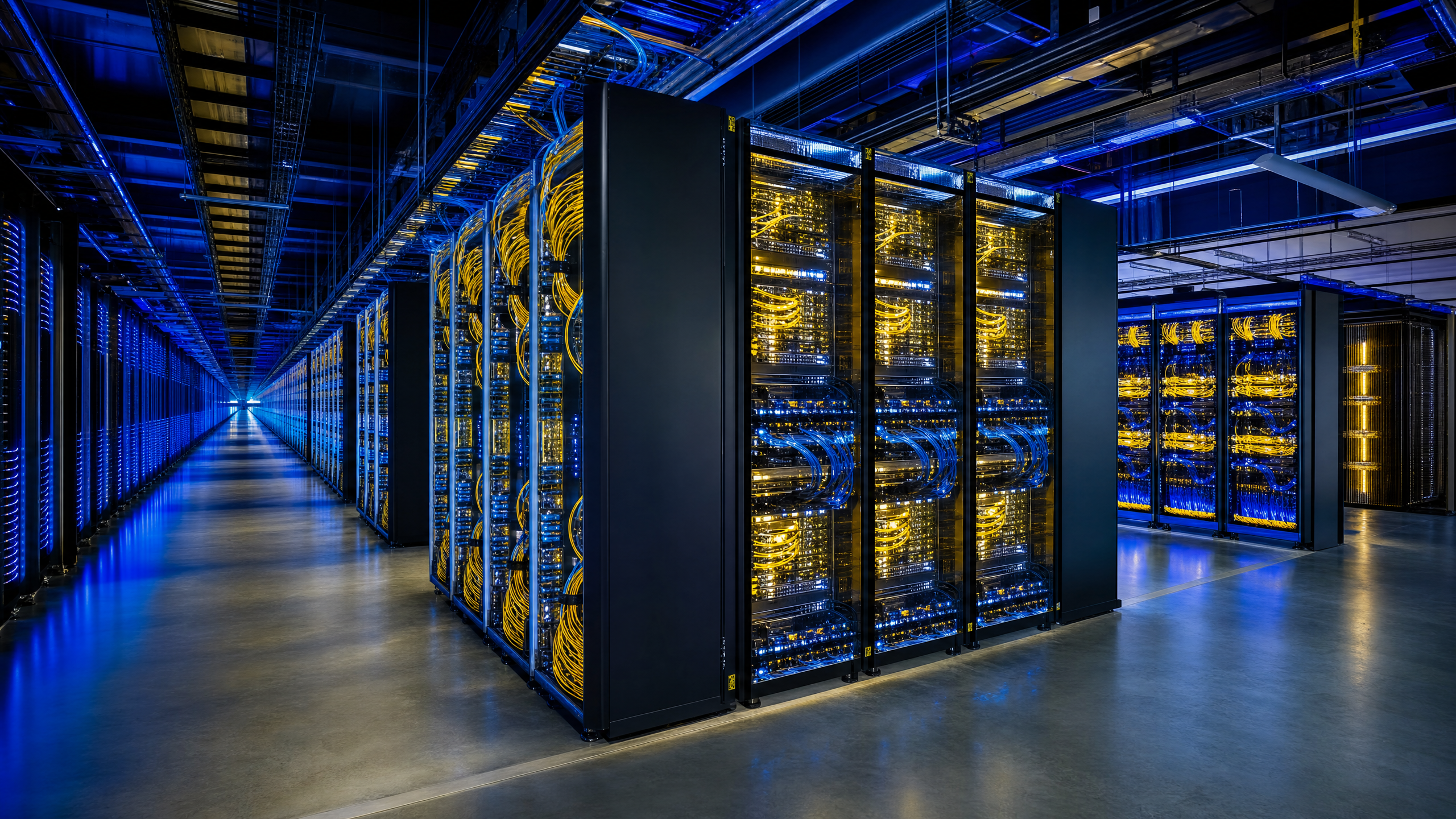
Methodology
AI Infrastructure Systems Engineering™
Our AISE™ framework evaluates 20 engineering domains as one integrated system — from strategic alignment through measurement and verification.
01Strategic Alignment
02Existing Conditions
03Demand Definition
04Site and Land Analysis
05Utility and Power Analysis
06Energy Storage and Resilience
07Fiber and Network Analysis
08Compute and Technology
09Cooling and Thermal Strategy
10Water Strategy
11Security
12Operations
13Sustainability
14Community and Stakeholder Impact
15Risk
16Financial and Lifecycle
17Phasing
18Governance
19Implementation Roadmap
20Measurement and Verification
Services
Decision-centered advisory and engineering services.
View all 14 services →016–10 weeks
AI Infrastructure Readiness Assessment™
Establish an evidence-based readiness baseline and a prioritized decision roadmap. The front door to every LegacyGrid AI engagement.
0210–18 weeks
AI Infrastructure Master Planning™
Convert demand and existing conditions into a coordinated, phased infrastructure plan across power, fiber, cooling, water, and resilience.
03By program phase
Owner's Engineering
Protect the owner's technical interests across interfaces, disciplines, contracts, and decision gates throughout the program lifecycle.
044–8 weeks
Technical Due Diligence
Test infrastructure claims, conditions, dependencies, and risks before investment or commitment. For investors, lenders, and owners.
056–14 weeks
Power and Grid Strategy
Create a credible power pathway aligned with demand, resilience, schedule, and grid conditions. Power is the critical path.
066–12 weeks
Resilience and BESS Strategy
Define continuity objectives and the role of battery energy storage within the complete resilience architecture.
Founding Principles
Seven principles that govern every engagement.
01
Independent Advice
Recommendations based on engineering judgment, documented analysis, and owner objectives — not vendor incentives.
02
Systems Thinking
AI infrastructure evaluated as an interconnected system: power, compute, cooling, water, fiber, resilience, and governance.
03
Technology Neutrality
Technologies evaluated on performance, interoperability, risk, lifecycle cost, and suitability for the client's specific context.
04
Resilience by Design
Reliability, redundancy, adaptability, continuity, and future expansion considered from the first engagement.
05
Responsible Infrastructure
Infrastructure decisions account for energy, water, environmental impact, community impact, workforce, and long-term stewardship.
06
Technical Excellence
Every deliverable meets the quality expected from a leading engineering consultancy.
07
Knowledge Leadership
LegacyGrid AI advances the market through frameworks, technical guidance, research, benchmarks, and thought leadership.
Certification
EDC Certified™ — Efficient Data Center Assessment
The EDC Certified™ Assessment evaluates efficient data center performance and governance against documented proprietary criteria. It goes beyond PUE to assess the full spectrum of efficiency, resilience, and community performance.
ACI
Air-Cooled Infrastructure
Water-conscious, air-cooled or water-minimized architecture.
BESS
Battery Energy Storage
Resilience, demand management, reserve capacity, and grid coordination.
TER
Thermal Energy Reuse
Heat recovery and reuse for campus buildings, district systems, and industrial processes.
xFRA
Agreement Architecture
Ground leases, community benefits, compute access, workforce development, and accountability.
Proprietary Offering
Accelerated Compute Campus™
LegacyGrid AI’s end-to-end owner-side advisory framework for organizations planning, evaluating, or developing AI infrastructure at scale. Seven integrated service offerings — from initial opportunity screening through operational and governance readiness.
No upfront commitment required. Engagements begin with an Opportunity Screen — a structured assessment of whether a 20MW+ accelerated compute campus is feasible for your site, organization, and market position.
01
Opportunity Screen
Structured go/no-go assessment of site, power, market, and organizational readiness before any capital commitment.
02
Readiness & Feasibility
Deep technical and commercial feasibility study covering power, fiber, cooling, zoning, environmental, and utility capacity.
03
Systems Architecture
Owner-controlled master plan defining compute density, power architecture, cooling strategy, and phased build sequence.
04
Pilot & Digital Twin
Pre-construction validation of the design through a controlled pilot block and a live digital twin of the full campus.
05
Procurement Advisory
Owner-side oversight of RFP development, vendor evaluation, contract negotiation, and selection — independent of any builder.
06
Owner’s Engineering
Independent technical representation through design, construction, and commissioning to protect the owner’s interests at every stage.
Insights
Engineering perspectives on AI infrastructure.
Systems Engineering
What Is AI Infrastructure Systems Engineering?
AI infrastructure is not a single product. It is a system of systems — power, compute, cooling, water, fiber, resilience, and governance — that must be engineered together.
Power Strategy
Power Is the New Constraint on AI Growth
AI infrastructure demand is outpacing utility capacity in most markets. Organizations that do not develop a credible power strategy will face schedule delays, cost overruns, and stranded investment.
Project Risk
Why AI Infrastructure Projects Fail Before Construction Begins
Most AI infrastructure failures are not construction failures. They are planning failures — missing power commitments, unverified site conditions, and incomplete demand definitions.
Owner's Engineering
Owner's Engineering for AI Infrastructure
Who represents the owner's technical interests when a data center developer, utility, and EPC contractor all have their own objectives? The answer is owner's engineering.
Begin with a 45-minute decision-framing discussion
Ready to engineer your AI infrastructure strategy?
We begin every engagement with a structured decision-framing discussion to define the decision, evidence available, stakeholders, timeline, and appropriate first scope.