PVAMU and the Waller County AI Infrastructure Corridor: A LegacyGrid Phase 1 Deep Dive
Prairie View A&M University sits at the center of one of the most strategically positioned AI infrastructure opportunities in Texas. Here's what the data shows — and what needs to happen next.
LegacyGrid AI Research · June 14, 2026
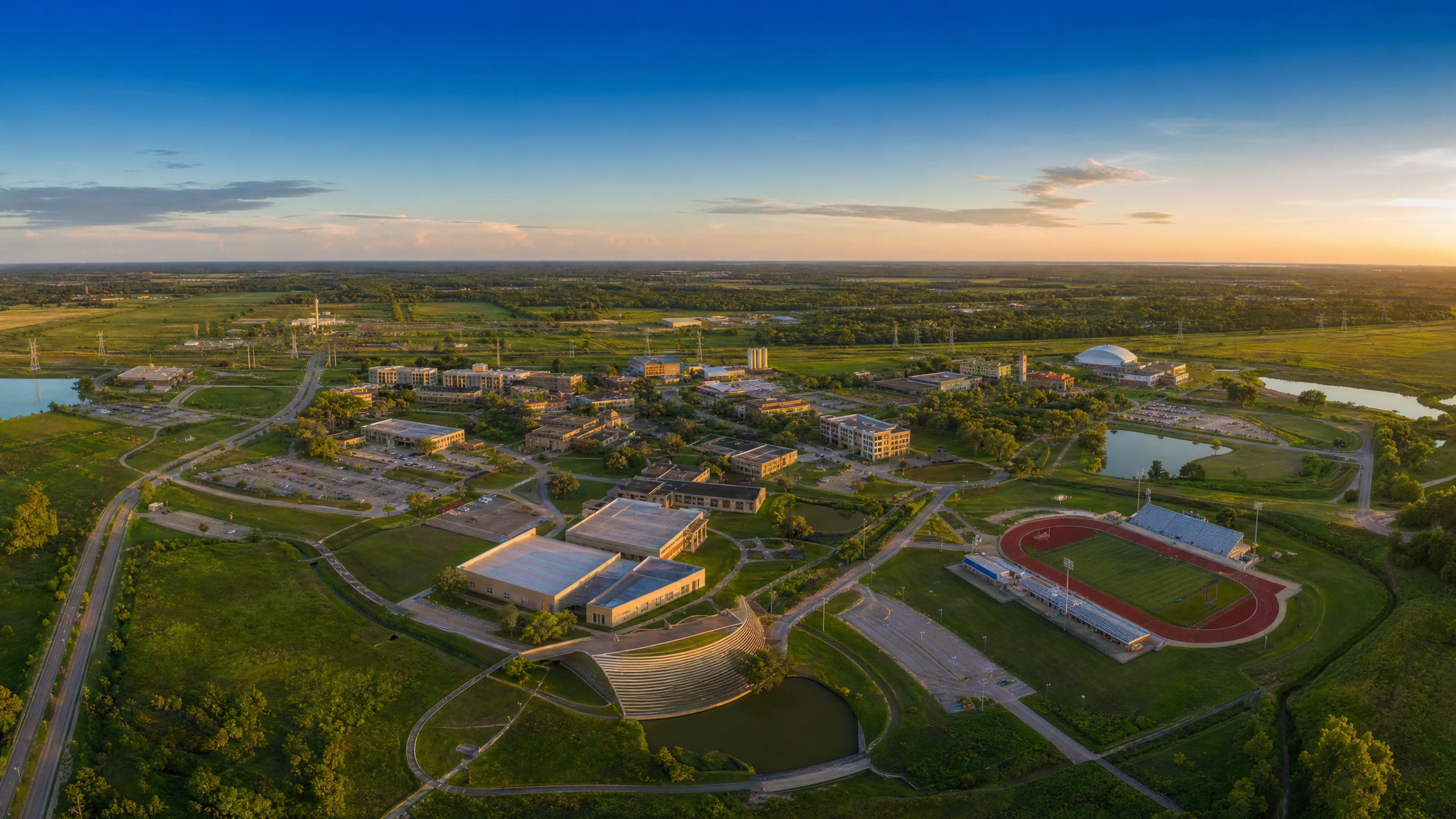
Prairie View A&M University — 1,440 acres, Waller County, Texas
When LegacyGrid began mapping AI infrastructure opportunities across Texas HBCUs, one site kept rising to the top of every scoring dimension: Prairie View A&M University in Waller County. Not because of a single factor, but because of how multiple strategic factors align in a way that is genuinely rare.
PVAMU is a 1,440-acre HBCU campus located approximately 45 miles northwest of Houston. It sits in the heart of what LegacyGrid calls the Waller County AI Infrastructure Corridor — a zone of emerging data-center activity anchored by Serverfarm's Hockley-area operations and accelerated by Texas Senate Bill 6, which established a $5 billion fund for AI data center infrastructure development in the state.
This article is a deep dive into what the LegacyGrid Phase 1 feasibility framework shows about PVAMU — the land, the power, the fiber, the workforce pipeline, the community context, and the deal structure. It is also an honest accounting of what is not yet known and what validation steps are required before any partnership conversation can begin.
The Site
What PVAMU Brings to the Table
Prairie View A&M University is the second-oldest public institution of higher education in Texas. It is a Historically Black College and University with a land-grant mission, a strong engineering program, and a campus footprint that most Texas institutions cannot match.
Total Campus Acreage
1,440 acres
Location
Prairie View, Waller County, TX
Distance to Houston
~45 miles northwest
Distance to Serverfarm Hockley Activity
~15–20 miles
HBCU Status
Yes — HBCU, Land-Grant
Phase 1 MW Target
60 MW feasibility study
The campus sits along US Highway 290, which provides direct highway access to Houston and to the broader I-10 corridor. The surrounding Waller County area has seen significant industrial and logistics development over the past decade, and the county's proximity to Houston's power infrastructure makes it a natural target for data-center expansion.
PVAMU also has something that most data-center sites do not: institutional legitimacy and community trust. A data center on or adjacent to a PVAMU-affiliated site carries a public-benefit story that a greenfield industrial site cannot replicate. That story matters — to regulators, to community members, to investors, and to the institution itself.
Power Readiness
The ERCOT Grid, CenterPoint Energy, and the 60MW Question
Power is the first filter for any data-center site. A 60-megawatt data center requires a continuous, reliable power supply at a scale that most utility substations cannot immediately provide without upgrades. The question for PVAMU is not whether power exists — it does — but whether the existing infrastructure can support a 60MW load, and what the upgrade path looks like.
PVAMU is served by CenterPoint Energy, one of Texas's largest electric utilities. The Waller County area is within the ERCOT grid, which covers approximately 90% of Texas's electric load. ERCOT has been under significant strain in recent years — the 2021 Winter Storm Uri failure being the most visible example — but it has also been the subject of substantial investment and reform since then.
The key validation step for power is a formal utility capacity study. LegacyGrid's Phase 1 feasibility framework requires a CenterPoint capacity assessment before any partnership conversation can move to term sheet. Without that assessment, the 60MW target is a hypothesis, not a commitment.
What the LegacyGrid framework does know: the Hockley area — approximately 15–20 miles from PVAMU — already has active data-center infrastructure from Serverfarm. That means the transmission infrastructure in the corridor is already being used for data-center loads. That is a strong signal that the corridor can support additional data-center development, but it does not replace a site-specific utility study.
Fiber & Connectivity
The Houston Fiber Corridor and PVAMU's Connectivity Position
Data centers require low-latency, high-bandwidth fiber connectivity. A 60MW AI data center without fiber access is a warehouse, not a data center. The fiber question for PVAMU is closely tied to its proximity to Houston — one of the most fiber-dense cities in the United States.
Houston is home to multiple carrier hotels, long-haul fiber routes, and internet exchange points. The US-290 corridor that runs from Houston through Waller County and past PVAMU is a known fiber route for several major carriers. The validation step is confirming which carriers have fiber within a cost-effective distance of the PVAMU site and what the cost of a fiber extension or dark fiber lease would be.
PVAMU itself has existing campus network infrastructure — as any major university does. The question is whether that infrastructure can be extended and upgraded to support data-center-grade connectivity. That is a solvable problem, but it requires a formal fiber assessment as part of the Phase 1 feasibility study.
Workforce Pipeline
Why PVAMU's Engineering Programs Are a Strategic Asset
Most data-center site evaluations treat workforce as an afterthought. LegacyGrid treats it as a core scoring dimension — because the workforce pipeline is one of the primary ways that an HBCU partnership creates value that a greenfield industrial site cannot.
PVAMU has a College of Engineering with programs in electrical engineering, computer engineering, computer science, and related fields. It also has a College of Agriculture, Science, and Engineering that includes programs relevant to the energy and infrastructure sectors. These programs create a direct pipeline from the campus to the skilled jobs that a data center and its supporting infrastructure generate.
The LegacyGrid Workforce Academy is designed to formalize and expand that pipeline — creating structured pathways from PVAMU's student population and the surrounding Waller County community into data-center operations, electrical work, fiber installation, HVAC maintenance, cybersecurity, and energy management. These are not theoretical jobs. They are the jobs that Serverfarm and similar operators need to fill to run a data center.
The workforce pipeline is also the most powerful community benefit story in the LegacyGrid model. A data center that trains and employs local students and residents is a fundamentally different public-benefit proposition than a data center that imports its workforce from outside the community.
The PantherXAI Context
PantherXAI and the Institutional AI Readiness Signal
PVAMU has publicly announced PantherXAI — an institutional AI initiative that signals the university's commitment to AI readiness. This is not a minor detail. An HBCU that has already made a public commitment to AI integration is a fundamentally different partner than an institution that is just beginning to explore the topic.
PantherXAI demonstrates that PVAMU's leadership understands the AI economy and is actively positioning the institution to participate in it. That institutional alignment is a prerequisite for the kind of partnership that LegacyGrid is proposing. A data-center partnership requires the institution to engage with complex deal structures, community benefit agreements, workforce development commitments, and long-term infrastructure planning. That requires institutional will — and PantherXAI is evidence that the will exists at PVAMU.
Phase 1 Readiness Overview
Why PVAMU / Waller County Is a Strong Phase 1 Candidate
LegacyGrid evaluates each site across multiple dimensions of institutional, infrastructure, and community readiness. The PVAMU / Waller County corridor performs strongly on the dimensions that matter most for a responsible AI infrastructure partnership: land position, institutional AI commitment, workforce pipeline, community alignment, and corridor proximity to active data center development.
Key strengths include PVAMU's significant land-grant campus footprint in Waller County, the PantherXAI initiative as a signal of institutional AI readiness, a strong engineering and workforce pipeline, favorable state policy environment under Texas SB 6, and proximity to Serverfarm's active development corridor. Power and fiber connectivity require formal validation before any partnership conversation advances to a term sheet — this is standard for any site of this scale, and it does not diminish the overall opportunity.
Next Steps
What Needs to Happen Before a Partnership Conversation Can Begin
LegacyGrid's Phase 1 feasibility framework is clear about what is known and what requires formal validation. The PVAMU site demonstrates strong institutional, land, workforce, and corridor positioning. Utility and connectivity validation are the next steps before any partnership conversation advances to a term sheet — this is standard practice for any responsible infrastructure engagement of this scale.
Utility Capacity Validation
A formal utility capacity study to confirm whether the site can support a data-center-scale power load and what the connection timeline would look like. This is the foundational infrastructure validation step.
Connectivity Assessment
A formal assessment of fiber and network carrier availability to confirm the site can support data-center-grade connectivity requirements.
Institutional Readiness Review
A review of institutional governance, land use, and development readiness to confirm the site and partnership structure align with PVAMU's mission, governance requirements, and long-term institutional goals.
Partner Fit Evaluation
An evaluation of whether the PVAMU / Waller County corridor meets the site criteria of LegacyGrid's preferred infrastructure partner. Partner fit determines whether the feasibility study advances to a formal engagement.
Community Benefit Framework Development
A preliminary community benefit framework that defines what the school, the students, and the surrounding community would receive from a data-center partnership — before any deal structure is proposed.
The Bottom Line
Why PVAMU Is the Right Place to Start
LegacyGrid's Phase 1 focus on PVAMU is not arbitrary. It reflects a careful evaluation of institutional readiness, land position, workforce pipeline, corridor opportunity, and community benefit potential. PVAMU's combination of these factors makes it the right place to begin building the proof of concept for the LegacyGrid model.
The power and fiber questions are real — but they are solvable. Every data-center site requires utility and connectivity validation. The question is whether the other dimensions of the site are strong enough to justify the investment in that validation. For PVAMU, they are.
"LegacyGrid connects all of it with structured, coded, actionable data. The school has land. Serverfarm has operational expertise. Utilities and vendors have infrastructure. Students and communities need pathways. LegacyGrid owns the intelligence layer."
The PVAMU / Waller County corridor is the proof-of-concept for the LegacyGrid model. If Phase 1 works — if the utility study confirms the 60MW opportunity, if the fiber assessment confirms connectivity, if Serverfarm confirms site fit — then the model scales. To TSU. To the TAMU System. To HBCUs across the South and beyond.
That is why PVAMU is Phase 1. Not because it is the only opportunity. Because it is the right place to prove the model.
Ready to Explore Phase 1?
LegacyGrid is looking for partners across every layer of the Phase 1 model.
If you represent PVAMU, a utility, a fiber provider, an infrastructure developer, an investor, or an economic development agency — start the conversation.