Power Is the New Constraint on AI Growth
Land is available. Capital is available. Power is the bottleneck — and most organizations planning AI infrastructure are not treating it as such.
LegacyGrid AI · Engineering Notes
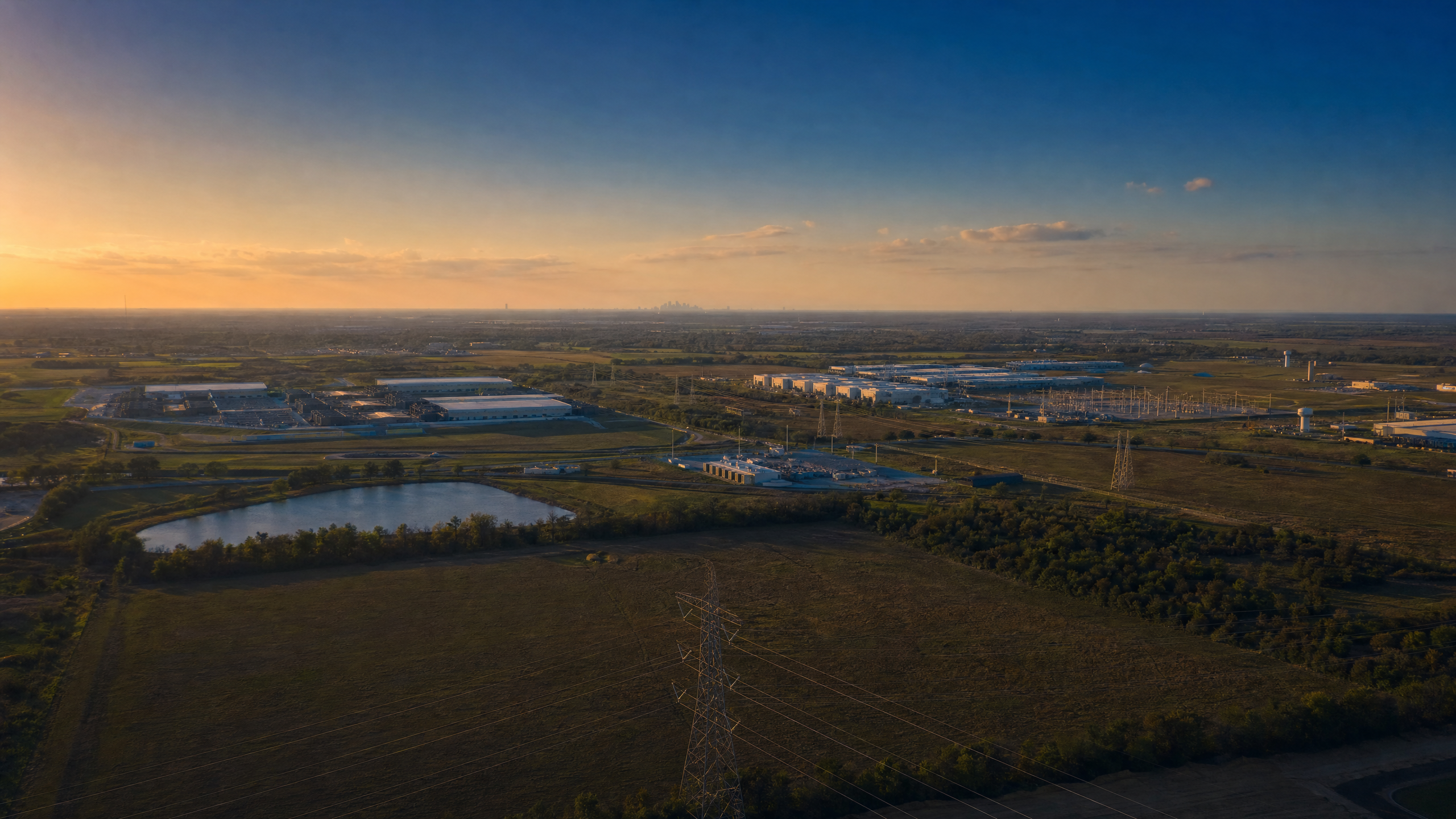
The Constraint
The Bottleneck Has Shifted
For most of the past decade, the primary constraint on data center development was real estate. Finding the right site — with the right combination of land, location, fiber, and labor — was the hard problem. Capital was available. Power was assumed.
That assumption no longer holds. The rapid scaling of AI compute — driven by large language models, training workloads, and inference infrastructure — has created power demand that the electric grid was not designed to absorb at this pace. Interconnection queues in major markets are measured in years, not months. Utility capacity is constrained in ways that cannot be resolved quickly. Grid infrastructure built for a different era of demand is being asked to support a fundamentally different load profile.
Power is now the primary constraint on AI infrastructure deployment. Organizations that treat it as a secondary consideration — something to be resolved after site selection, after deal structure, after technology decisions — are taking on risk they may not fully understand.
The Dimensions
Four Dimensions of the Power Constraint
Interconnection Queue Congestion
The interconnection queue is the process by which new loads connect to the electric grid. In most major markets, the queue is severely congested. Projects that submitted interconnection requests in 2022 or 2023 are still waiting for study results. New requests in constrained markets may face wait times of five to seven years before interconnection is approved. This is not a temporary condition — it reflects a fundamental mismatch between the pace of AI infrastructure development and the pace of grid planning and investment.
Utility Capacity Constraints
Even where interconnection is technically feasible, utility capacity may be insufficient to serve large AI loads without significant transmission and distribution upgrades. These upgrades take time — often three to five years for major transmission projects — and may require cost allocation to the new load. Organizations that assume utility capacity is available without verifying it are taking on significant schedule and cost risk.
Load Profile Mismatch
AI training workloads create a load profile that is fundamentally different from traditional data center loads. Training runs can create sustained, high-density power draws that stress grid infrastructure in ways that utility operators have not previously managed at scale. Understanding how the utility will respond to this load profile — and what operational constraints they will impose — is a critical part of power strategy.
Rate Structure and Cost Uncertainty
The cost of power for AI infrastructure is not simply the published utility rate. Interconnection costs, demand charges, transmission charges, ancillary service charges, and potential cost allocation for grid upgrades can significantly increase the effective cost of power. Organizations that model power costs using published rates without accounting for these additional charges may significantly underestimate their operating costs.
The Implication
Power Strategy Must Come First
The most important implication of the power constraint is sequencing. Power strategy must be the first question in AI infrastructure planning — not the last. Organizations that select a site, negotiate a deal, and then discover that power is unavailable or prohibitively expensive have made a costly mistake that is difficult to reverse.
Power strategy begins with a utility assessment: Who is the serving utility? What is their current load and capacity situation? What is the interconnection queue status? What are the transmission and distribution constraints? What is the realistic timeline for interconnection? What are the likely costs? These questions must be answered with verified data — not utility marketing materials or developer representations.
Power strategy also includes backup power, demand response, and storage. AI infrastructure that depends on a single utility connection without backup power is exposed to availability risk that may be unacceptable for mission-critical applications. Battery energy storage systems (BESS), on-site generation, and demand response programs can provide resilience — but they must be designed as part of the power strategy, not added as afterthoughts.
The Opportunity
Power Constraint as Competitive Advantage
The power constraint is not only a risk — it is also a source of competitive advantage for organizations that understand it. Sites with available power, clear interconnection paths, and favorable utility relationships are genuinely scarce. Organizations that identify and secure these sites before the market fully prices the scarcity will have a significant advantage.
This is why power strategy is not just a risk management exercise — it is a strategic planning exercise. The organizations that will succeed in AI infrastructure development over the next decade are those that treat power as a strategic asset, not a commodity input.
For higher education institutions, economic development organizations, and communities evaluating AI infrastructure opportunities, the power question is equally important from the other direction: do you have power capacity that AI infrastructure developers need? If so, that capacity is a strategic asset — and understanding its value requires the same rigorous analysis as any other infrastructure decision.
Professional Practice Boundary
This article reflects general engineering analysis and does not constitute advice for any specific project, site, or organization. Power availability, interconnection timelines, and utility capacity vary significantly by market and must be evaluated through direct utility engagement and independent technical analysis. LegacyGrid AI provides owner-side engineering services — we do not represent utilities, developers, or technology vendors.