Data Center News
LegacyGrid AI advancing Community Grid Asset model in Waller County corridor — utility pre-application meeting underway.Tesla Megapack 3 now in production in Waller County, Texas — 25 miles from PVAMU. LegacyGrid AI analysis.SpaceX spent $329M on Tesla Megapacks — and still burned gas next to a Black community. LegacyGrid AI responds.Microsoft announces 3GW AI data center expansion across 5 statesNashville moratorium on new data centers extended through Q4 2026Serverfarm continues expansion in Waller County, Texas corridorTexas grid operator ERCOT warns of strain from AI data center load growthPVAMU PantherXAI program advances AI curriculum developmentGoogle signs 500MW renewable PPA in Texas to power new AI infrastructureWater-cooled AI data centers now account for 38% of new builds — Uptime InstituteWaller County emerges as top-tier AI infrastructure corridor in TexasHBCUs across the South position for AI infrastructure partnershipsData center power demand projected to triple by 2030 — IEA reportLG-CS-001: Google Saint-Ghislain proves BESS can serve resilience and grid services simultaneously — LegacyGrid AI analysis.Abbott's data center audit requires the same 5 questions LegacyGrid AI asks for every HBCU partnership — read the analysis.Trump vs. Abbott on Texas data centers — LegacyGrid AI explains what both sides are missing.NAACP sues SpaceXAI over unpermitted gas turbines in Memphis — community protection is non-negotiable.LegacyGrid AI advancing Community Grid Asset model in Waller County corridor — utility pre-application meeting underway.Tesla Megapack 3 now in production in Waller County, Texas — 25 miles from PVAMU. LegacyGrid AI analysis.SpaceX spent $329M on Tesla Megapacks — and still burned gas next to a Black community. LegacyGrid AI responds.Microsoft announces 3GW AI data center expansion across 5 statesNashville moratorium on new data centers extended through Q4 2026Serverfarm continues expansion in Waller County, Texas corridorTexas grid operator ERCOT warns of strain from AI data center load growthPVAMU PantherXAI program advances AI curriculum developmentGoogle signs 500MW renewable PPA in Texas to power new AI infrastructureWater-cooled AI data centers now account for 38% of new builds — Uptime InstituteWaller County emerges as top-tier AI infrastructure corridor in TexasHBCUs across the South position for AI infrastructure partnershipsData center power demand projected to triple by 2030 — IEA reportLG-CS-001: Google Saint-Ghislain proves BESS can serve resilience and grid services simultaneously — LegacyGrid AI analysis.Abbott's data center audit requires the same 5 questions LegacyGrid AI asks for every HBCU partnership — read the analysis.Trump vs. Abbott on Texas data centers — LegacyGrid AI explains what both sides are missing.NAACP sues SpaceXAI over unpermitted gas turbines in Memphis — community protection is non-negotiable.
Texas Policy — Data Center Readiness | LGAI EDC Framework

Abbott's Data Center Audit Directive Is the LGAI Framework in Government Form

Governor Abbott just required every Texas data center to answer the same five questions LegacyGrid AI has been asking for HBCU partnerships. Here is what that means — and why it matters for every institution considering an AI infrastructure deal.

Carl Adams, Founder — LegacyGrid AI
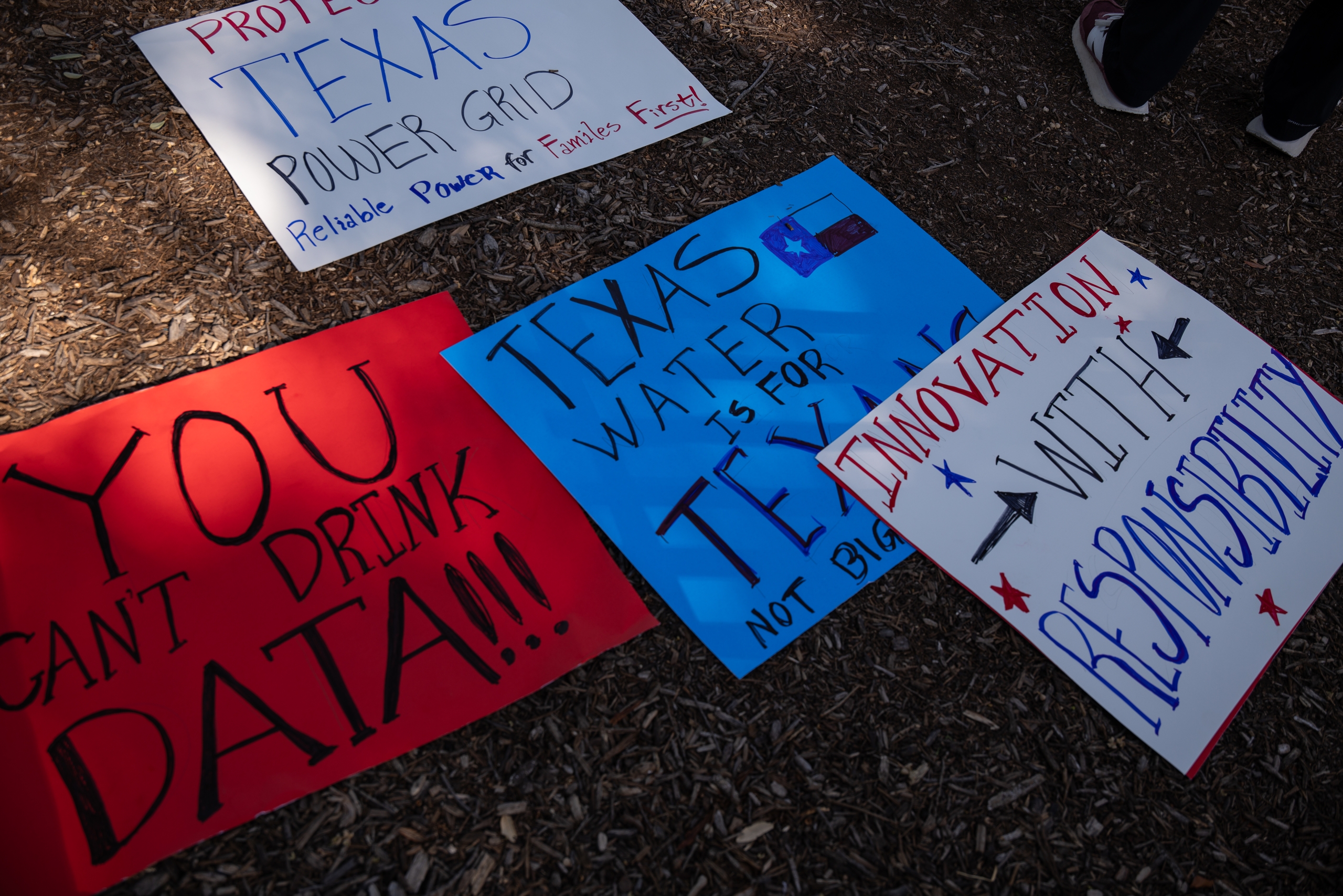
Texas data center audit — community protest signs reading You Can't Drink Data and Protect Texas Power Grid

TEXAS DATA CENTER ACCOUNTABILITY — COMMUNITIES ARE ASKING THE SAME QUESTIONS LGAI HAS BEEN ASKING (PHOTO: TEXAS TRIBUNE)

474 GW
ERCOT Grid Requests — 5× Texas Peak Demand
90%
New Power Requests from Data Centers
5 Items
Abbott Audit Requirements — All Map to LGAI Layers
Aug 3, 2026
Abbott Directive Date — PUCT + ERCOT

What Abbott Actually Directed

On August 3, 2026, Governor Greg Abbott directed the Public Utility Commission of Texas (PUCT) and the Electric Reliability Council of Texas (ERCOT) to conduct a comprehensive verification and audit of all data centers advancing through ERCOT's interconnection process. The directive is unambiguous: the audit must be completed before any data center project moves forward. Any project that fails to comply will be denied connection to the Texas grid.

The scale of the problem Abbott is responding to is significant. ERCOT is currently considering approximately 474 gigawatts of requests to connect to the Texas grid — more than five times Texas' record peak electricity demand. Approximately 90 percent of those new power requests are from data centers. That is not a planning challenge. That is a grid stability crisis in formation.

Abbott's directive builds on his June 10 order and requires PUCT and ERCOT to obtain five specific categories of information from each data center project. Every single one of those five categories maps directly to a layer of the LegacyGrid AI EDC Framework.

"Any project that fails to comply with the requirements set forth by the PUCT and ERCOT, and by state law, must be denied connection to the Texas grid. Simply put, Texans must come first." — Governor Greg Abbott, August 3, 2026

The Five Audit Requirements — and the LGAI Layer Each One Maps To

LegacyGrid AI has been conducting this exact evaluation for HBCU AI infrastructure partnerships since the firm's founding. Abbott's directive is the government version of the LGAI methodology. Here is the direct mapping:

ABBOTT AUDIT REQUIREMENT 01
Financial Self-Sufficiency
All state and local tax incentives, grants, abatements, or other public financial assistance received or expected. Are data centers paying their own way or depending on the state?
LGAI Layer 1 — AI Readiness Assessment
LegacyGrid AI's readiness assessment evaluates the full financial structure of any proposed AI infrastructure partnership — including public subsidies, tax abatements, and what the school or community is actually receiving in return for any public financial support. A deal where the data center captures all public incentives while the community bears infrastructure costs is not a good deal.
ABBOTT AUDIT REQUIREMENT 02
Power Self-Sufficiency
Projected annual and peak electricity consumption; any effort to construct or procure on-site electric generation including generation type; or other measures to reduce demand on the ERCOT grid.
LGAI Layer 2 — Infrastructure Feasibility
LegacyGrid AI's infrastructure feasibility evaluation covers power access, utility capacity, on-site generation potential (solar, BESS, wind), grid interconnection requirements, and the full power strategy for the proposed facility. We evaluate whether a partner is bringing their own power or planning to draw entirely from the grid — and what that means for the host community's utility costs and reliability.
ABBOTT AUDIT REQUIREMENT 03
Water Sourcing and Conservation
Projected annual and peak water consumption; anticipated sources of water supply; cooling technology (air-cooled, closed-loop, or water-efficient). Are data centers using water needed by local communities?
LGAI Layer 2 — Infrastructure Feasibility (Water Layer)
Water is one of the most underexamined dimensions of AI infrastructure feasibility. LegacyGrid AI evaluates cooling architecture, water source, consumption projections, and whether the facility's water demand competes with community needs. The Google Saint-Ghislain case study (LG-CS-001) demonstrates that grey water from industrial canals can replace potable water for cooling — but that requires deliberate engineering decisions, not defaults.
ABBOTT AUDIT REQUIREMENT 04
Community Protection Measures
Noise mitigation, light controls, setbacks, traffic improvements, emergency response coordination, and other community protection measures — understanding that each community is unique.
LGAI Layer 3 — Deal Structure and Guardrails
LegacyGrid AI's deal structure layer builds the community protection framework before any partner conversation begins. Noise, light, traffic, emergency response, environmental compliance, and community notification are not optional add-ons — they are conditions of the deal. The SpaceX Memphis situation (LG-CS-002) is the reference case for what happens when these protections are absent: unpermitted gas turbines, no community consultation, and a federal lawsuit.
ABBOTT AUDIT REQUIREMENT 05
Ownership and Controlling Interests
Full disclosure of ownership and controlling interests in the project.
LGAI Layer 3 — Deal Structure and Guardrails (Transparency)
LegacyGrid AI requires full ownership and controlling interest disclosure as a condition of any partnership evaluation. An HBCU should never enter a data center partnership without knowing exactly who owns the project, who controls the operating entity, and what the ownership structure means for the school's rights, revenues, and exit options if the partner fails to perform.
Texas data center under construction — aerial view showing scale of AI infrastructure buildout in Texas

TEXAS DATA CENTER CONSTRUCTION — THE SCALE OF THE BUILDOUT IS WHY ABBOTT'S AUDIT DIRECTIVE EXISTS (PHOTO: CNBC)

What This Means for HBCUs Considering AI Infrastructure Partnerships

Abbott's directive creates a new baseline for what any AI infrastructure project in Texas must demonstrate before it can connect to the grid. For HBCUs considering partnerships, this changes the landscape in three important ways.

First, the questions are now mandatory, not optional. Any data center partner approaching an HBCU in Texas must now answer Abbott's five audit questions to ERCOT's satisfaction before they can operate. That means the partner must have documented answers to power self-sufficiency, water sourcing, community protection, financial structure, and ownership disclosure. An HBCU that asks these same questions in the partnership negotiation is no longer asking for special treatment — it is asking for the same information the state of Texas is requiring.

Second, the audit creates a verification mechanism that did not exist before. Before Abbott's directive, a data center partner could make verbal commitments about community protection, on-site power, and water conservation without any state-level verification. Now ERCOT and PUCT must verify these claims before grid connection is approved. That creates an external accountability layer that benefits communities — including HBCU communities — that are adjacent to proposed data center sites.

Third, it validates the LGAI approach. LegacyGrid AI has been conducting this exact evaluation — financial accountability, power self-sufficiency, water sourcing, community protection, ownership transparency — as the foundation of every AI infrastructure partnership assessment. Abbott's directive confirms that these are not LegacyGrid AI's idiosyncratic concerns. They are the minimum standard the state of Texas now requires before any data center can connect to the grid.

The LGAI EDC Framework: Built for Exactly This Moment

The LegacyGrid AI EDC Framework is a five-layer AI Infrastructure Systems Engineering methodology designed to evaluate, structure, and monitor AI infrastructure partnerships for HBCUs and historically underserved communities. It was built before Abbott's directive existed — because the questions Abbott is now requiring were already the right questions.

LGAI EDC FRAMEWORK — 5 LAYERS
Layer 1 — AI Readiness Assessment
Score the institution's AI strategy, student training, faculty adoption, governance readiness, and community outreach. Evaluate the full financial structure of any proposed partnership — including public subsidies and what the community receives in return. The front door to every LegacyGrid AI engagement.
Layer 2 — Infrastructure Feasibility
Evaluate land, buildings, power, fiber, utility impact, zoning, data center feasibility, and partner fit. Assess on-site generation potential (solar, BESS, wind), water sourcing, cooling architecture, and grid interconnection requirements. Identify whether a 60MW+ opportunity exists — and on what terms.
Layer 3 — Deal Structure and Guardrails
Build the community protection framework before any partner conversation begins. RFP templates, partner checklists, deal terms, student benefit requirements, compute-access language, community protection measures (noise, light, traffic, emergency response), environmental compliance verification, ownership disclosure requirements, and board-facing summaries.
Layer 4 — AI Hub and Workforce Program
Build programs for AI literacy, data center operations curriculum, cybersecurity training, student internships, apprenticeships, and community access. Ensure the partnership delivers measurable workforce benefit — not just infrastructure revenue.
Layer 5 — Impact Dashboard
Track whether promises in AI infrastructure and workforce deals are actually being delivered — lease payments, compute credits, workforce outcomes, community benefits, environmental compliance, and water and power performance. Verification is not optional.

The Bigger Picture: Texas Is Setting the National Standard

Abbott's audit directive is not just a Texas story. It is the leading edge of a national reckoning with AI infrastructure accountability. The questions Abbott is requiring — power self-sufficiency, water sourcing, community protection, financial transparency, ownership disclosure — are the same questions communities in Nashville, Memphis, Virginia, and every other data center market are beginning to ask.

The difference is that Texas now has a government mechanism to enforce the answers. Other states and communities are still relying on voluntary commitments and community advocacy. The gap between those two situations is exactly where LegacyGrid AI operates — helping institutions and communities build the evaluation framework, the deal structure, and the verification system before a partner arrives with a proposal.

An HBCU that has completed an LGAI readiness assessment and has an EDC Framework evaluation in place is not starting from zero when a data center partner comes to the table. It is starting from a position of documented evidence, structured questions, and enforceable guardrails. That is the difference between a community that gets a good deal and one that gets a press release.

LGAI POSITION

Abbott's directive validates what LegacyGrid AI has been building: a structured, evidence-based framework for evaluating AI infrastructure partnerships that puts the community's interests first. The five questions Abbott is now requiring are the five questions every HBCU should be asking before any data center partner conversation begins.

LegacyGrid AI offers AI Readiness Assessments and EDC Framework evaluations for HBCUs and institutions considering AI infrastructure partnerships. If your institution is in a data center corridor — or expects to be — the time to build the evaluation framework is before the partner arrives, not after.

REQUEST AN ASSESSMENT →