Meta, Shopify, and the Infrastructure Behind the Next Commerce Platform
The emerging Meta–Shopify contest is not only about storefronts or social reach. It is a test of how commerce platforms connect consumer intent, merchant operations, AI workloads, and resilient infrastructure.
LegacyGrid AI · July 30, 2026 · 8 min read · The EDC Report

Commerce competition increasingly depends on the infrastructure connecting discovery, transactions, and AI.
The next important contest in digital commerce may not be decided by the most attractive storefront or the largest audience. It may be decided by which platform can make discovery, transaction, merchant operations, and artificial intelligence work together without creating unacceptable technical or commercial dependence.
That is the significance of the market discussion around Meta's commerce ambitions and Shopify. A BNN Bloomberg interview with Dominic Ball of Rothschild & Co Redburn framed the issue through an analyst's downgrade of Shopify amid a potential Meta threat. The interview is useful as a signal of investor attention, but the underlying story deserves a wider lens: commerce platform infrastructure is becoming a strategic layer for the technology industry.
Meta has a distribution advantage through its consumer applications, while Shopify is built around merchant software and commerce operations. Those are different starting points. The question is whether they converge — and what that convergence would demand from the infrastructure supporting them.
The Real Contest
The real contest begins before checkout
A conventional commerce comparison focuses on storefront design, payment conversion, or customer acquisition. Those measures matter, but they describe only the visible edge of a much larger system. Modern commerce depends on product catalogs, inventory synchronization, identity, fraud screening, payment authorization, fulfillment data, customer service, analytics, and integrations with other business software.
Meta's potential opening is at the moment of discovery. People already use its platforms to communicate, follow creators, encounter recommendations, and respond to advertising. Bringing more commerce functionality into those environments could reduce the distance between seeing a product and acting on interest. It could also make social context, recommendation systems, messaging, and advertising part of one connected operating environment.
Shopify approaches the problem from the merchant side. Its public product materials describe a commerce stack spanning online and in-person selling, checkout, payments, marketing, analytics, and an app ecosystem. That architecture is designed to help businesses operate commerce across channels, giving Shopify a different strategic center of gravity from a social network.
Discovery and recommendation are becoming part of the commerce stack — not just marketing channels.
Checkout is only one stage in a chain of dependent systems: catalog, inventory, identity, payments, fulfillment.
Merchant control and audience access represent different forms of platform value — not interchangeable.
Multi-platform strategies can reduce dependence, but they may increase integration costs and complexity.
Infrastructure Layer
Commerce platform infrastructure is the decisive layer
The more capabilities a platform combines, the more important its underlying infrastructure becomes. A recommendation engine can generate demand, but a commerce system must then retrieve accurate product information, reserve inventory, calculate taxes or shipping, authorize a payment, detect fraud, and record the transaction. Each step creates dependencies and possible failure modes.
Competitive advantage will depend on uptime, latency, observability, security, data governance, API reliability, and the ability to scale across geographies and traffic spikes.
The technical challenge grows when AI enters the picture. Real-time recommendations, automated merchandising, demand forecasting, conversational shopping, and support agents can require substantial data movement and compute. Platform builders must decide which workloads run close to the customer, which can be processed in batches, and which data can be shared across systems.
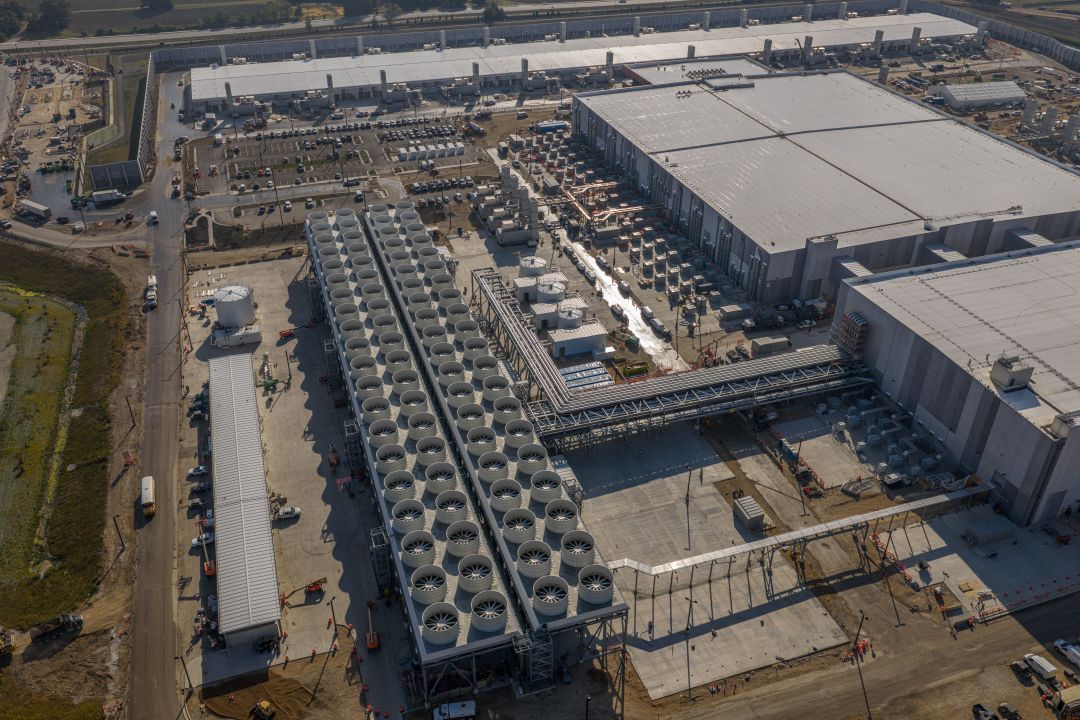
A platform's visible interface rests on a chain of data, API, payment, and infrastructure dependencies.
Reliability becomes a product feature when a platform sits inside the transaction path. AI workloads add requirements for compute capacity, networking, storage, and governance. Modular APIs can expand capability while also increasing operational complexity.
Platform Comparison
Meta and Shopify start with different strengths
Meta's strength is the relationship between consumer attention and recommendation. Its platforms can potentially connect social context, advertising signals, messaging, creators, and product discovery. If those components become more tightly integrated with transactions, merchants may gain a shorter path from intent to purchase.
Shopify's strength is the merchant operating layer. Its ecosystem is designed around businesses managing products, orders, customers, payments, channels, and extensions. The platform's value is therefore linked to operational continuity and merchant agency, not just to the performance of a single campaign or audience feed.
These strengths are complementary rather than interchangeable. A discovery-led platform may be excellent at creating demand while a merchant-led platform may be better suited to organizing the business behind that demand. Some companies may use both. The strategic question is whether integrations remain open enough for that coexistence to be practical, economical, and resilient.
Technology Leaders
What technology leaders should evaluate
Companies deciding how deeply to adopt a commerce platform should look beyond customer-acquisition metrics. The most useful questions concern control, continuity, and the ability to change direction.
Data portability is central. Can a business export catalogs, customer records, order history, and performance data in usable formats? Are permissions clear? Can the company connect the platform to its own analytics, identity, security, and fulfillment systems without fragile workarounds?
Resilience matters just as much. A platform that performs well during normal demand but becomes difficult to operate during a traffic surge, API incident, policy change, or regional outage creates business risk.
AI governance belongs in the same conversation. Businesses need to understand what data is used for recommendations or automation, where sensitive information is processed, and how model-driven actions can be audited.
Assess exportability and integration before committing critical workflows to any single platform.
Map failure scenarios across APIs, payments, identity, inventory, and fulfillment before a crisis.
Treat AI data use, auditability, and human oversight as architecture requirements — not afterthoughts.
Account for both baseline transactions and AI-driven demand variability in infrastructure planning.
AI Infrastructure Connection
Why AI data center engineering now belongs in the conversation
The evolution of commerce platforms has a direct infrastructure consequence: AI-enabled features turn customer and merchant systems into increasingly compute-intensive environments. That does not mean every workload belongs in a high-density AI facility. It does mean platform builders need a deliberate way to match workload characteristics with capacity, power, cooling, network, storage, and deployment choices.
Engineering and consulting teams such as LegacyGrid AI operate in that practical space, helping technology organizations think through AI data center requirements and infrastructure decisions. The relevant connection is not that LegacyGrid AI is part of the Meta or Shopify story — it is not presented that way here — but that platform competition illustrates why infrastructure planning must follow business architecture.
A commerce company preparing for more inference, personalization, forecasting, or automation may need to model demand patterns, latency targets, redundancy, energy use, and expansion paths together. The strongest designs connect those technical decisions to the services customers actually experience.
Strategic Outlook
The next platform advantage will be earned operationally
Meta's commerce ambitions and Shopify's merchant-centered model represent different answers to the same market shift: commerce is becoming more connected, more automated, and more dependent on data. The resulting competition will be visible in consumer interfaces, but its durability will be determined by less visible systems.
Technology leaders should watch the quality of integrations, the clarity of data controls, the reliability of transaction services, and the practical economics of running across channels. They should also watch whether AI features improve merchant outcomes without making systems harder to govern.
The most resilient strategy may not be choosing one platform identity over another. It may be designing an architecture that preserves options: clear system boundaries, portable data, observable interfaces, and infrastructure that can support growth without locking every future decision to today's assumptions.
Commerce platform infrastructure is more than a backend concern. It is part of the competitive proposition. Companies that plan compute, data, networks, resilience, and AI governance alongside product strategy will be better positioned to turn platform change into durable capability.
LegacyGrid AI — Infrastructure Engineering
LegacyGrid AI helps organizations evaluate AI data center requirements, infrastructure feasibility, and deal structures for responsible AI infrastructure development. If your organization is planning compute, data center, or energy infrastructure, connect with the LegacyGrid AI team.
The Meta vs. Shopify infrastructure race illustrates a pattern LegacyGrid AI tracks closely: the companies that control the compute layer control the commerce layer. For HBCUs and historically underserved communities, the question is not which hyperscaler wins — it is whether the communities hosting the infrastructure that powers these platforms receive measurable benefit from that hosting relationship. LegacyGrid AI's EDC Framework evaluates AI infrastructure partnerships to ensure that compute access, workforce development, community benefits, and revenue participation are built into the deal structure from the start.
If your institution is in a data center corridor — or expects to be — the time to build the evaluation framework is before the partner arrives. LegacyGrid AI offers AI Readiness Assessments and EDC Framework evaluations for HBCUs and institutions considering AI infrastructure partnerships.
REQUEST AN ASSESSMENT →