SpaceX xAI Memphis: When BESS Investment and Community Harm Coexist
SpaceX spent $329M on Tesla Megapacks and installed unpermitted gas turbines next to a Black community. The Memphis contradiction is the clearest argument for why clean energy investment and community protection must be part of the same system.
LegacyGrid AI Infrastructure Advisory

SPACEX XAI MEMPHIS DATA CENTER — MEMPHIS, TENNESSEE — BESS + GAS TURBINE DEPLOYMENT
LG-CS-002
Contrast Study — Community Impact
SpaceX xAI Memphis Data Center
Memphis, Tennessee
LG-CS-001 — Google Saint-Ghislain
Based on publicly available reporting — not SpaceX engineering documents
Why This Case Study Exists
LG-CS-001 documented what responsible grid-interactive BESS deployment looks like at hyperscale — Google Saint-Ghislain proved that backup generation does not have to be a stranded asset, and that a data center can be an active participant in the energy system rather than a passive consumer.
LG-CS-002 documents what happens when a company makes a massive clean energy investment — $329 million in Tesla Megapacks — and simultaneously installs unpermitted gas turbines next to a Black community. The Memphis contradiction is not a minor compliance issue. It is the clearest available illustration of why clean energy investment and community protection must be part of the same system, not treated as separate decisions.
For LegacyGrid AI, this case study is the argument in concrete form. Every HBCU and historically underserved community considering an AI infrastructure partnership needs to understand what Memphis represents — and what guardrails must be in place before any partner conversation begins.
"Clean energy investment and community harm are not mutually exclusive. Memphis proves it. Responsible AI infrastructure requires both clean technology AND community protection. Neither alone is sufficient." — LegacyGrid AI
The System: What SpaceX Actually Built
| COMPONENT | REPORTED SPECIFICATION |
|---|---|
| Owner / Operator | SpaceX / xAI (Elon Musk) |
| Location | Memphis, Tennessee |
| Facility Type | AI data center / compute cluster |
| BESS Supplier | Tesla Energy (Megapack) |
| BESS Investment (H1 2026) | ~$329 million |
| Megapack Units | ~168 units (reported) |
| Power Target | 20 GW by 2027 (stated goal) |
| Backup / Supplemental Power | Gas turbines — installed without required permits |
| Community Context | Predominantly Black neighborhood — Memphis, TN |
| Regulatory Action | NAACP federal lawsuit — unpermitted gas turbine operation |
| BESS Purpose | Grid-scale energy storage for AI compute load |
| Gas Turbine Purpose | Supplemental / backup power — not disclosed to community |
| Permitting Status (gas turbines) | Installed and operated without required air quality permits |
| Environmental Justice Context | Community already burdened by industrial air pollution |
The Contradiction: $329M in Clean Technology, Unpermitted Pollution Next Door
The Memphis situation is not a story about a company that ignored clean energy. SpaceX made one of the largest single BESS investments in the AI infrastructure buildout — $329 million in Tesla Megapacks in the first half of 2026 alone. That is a serious commitment to battery-based energy storage at scale.
The problem is what happened simultaneously. SpaceX installed gas turbines at the Memphis facility without the required air quality permits. The turbines operated in a predominantly Black neighborhood that already carries a disproportionate burden of industrial air pollution. The NAACP filed a federal lawsuit. The community was not consulted. The permits were not obtained. The turbines ran anyway.
This is the contradiction that LegacyGrid AI's framework is designed to prevent: a company can invest heavily in clean technology on one side of the ledger while creating environmental harm on the other — and call itself a responsible infrastructure developer. Memphis shows that BESS investment and community harm are not mutually exclusive. They coexisted at the same facility, at the same time, operated by the same company.
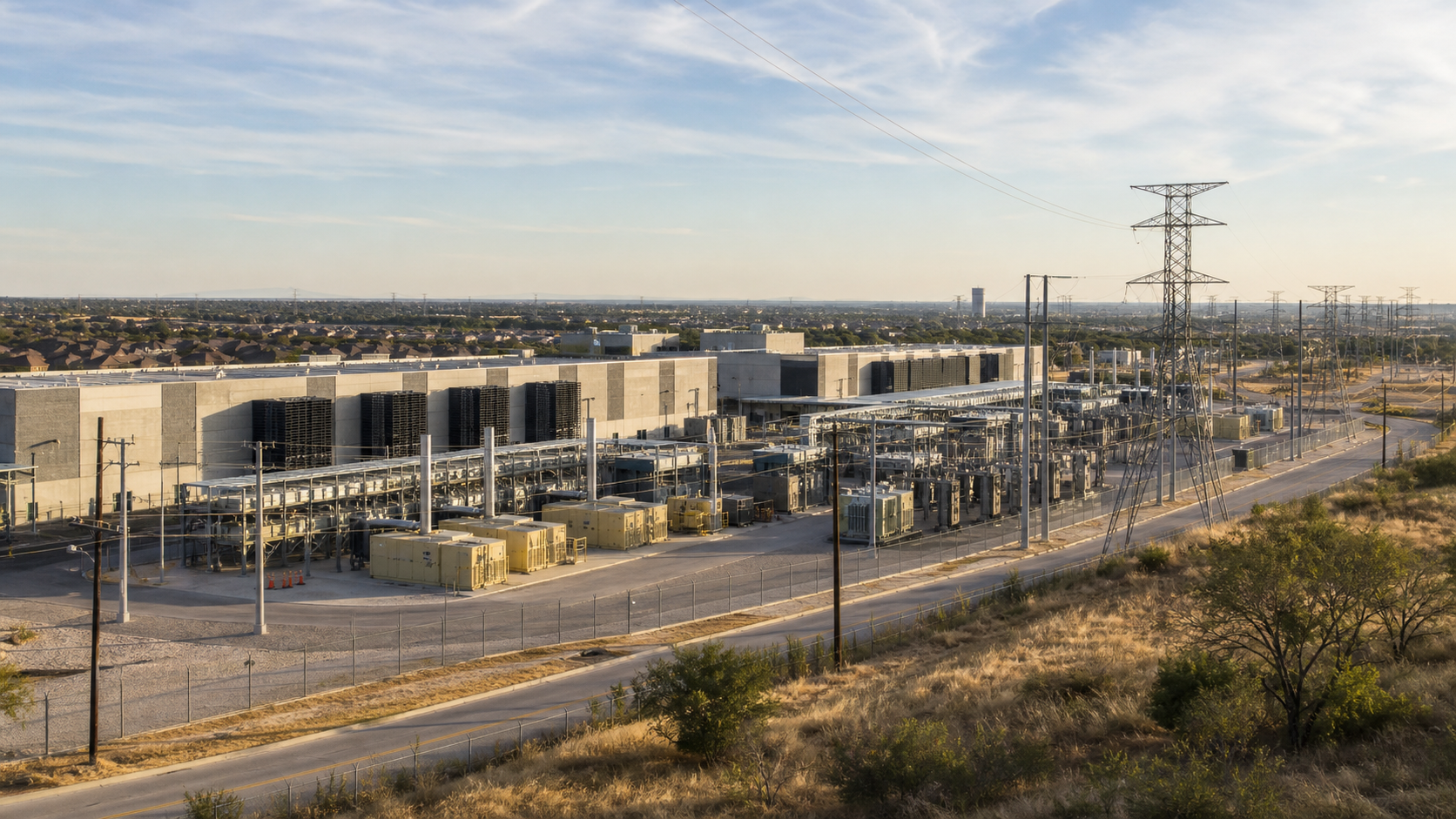
THE SCALE OF THE AI INFRASTRUCTURE BUILDOUT — WHAT GETS BUILT MATTERS AS MUCH AS HOW MUCH IS INVESTED
The LG-CS-001 vs. LG-CS-002 Contrast
- BESS deployed as proof-of-concept for generator replacement
- Grid-interactive — participates in Belgian ancillary services market
- On-site solar co-located with data center
- Chillerless cooling — no conventional mechanical chillers
- Industrial grey water used instead of potable water
- PUE 1.09 — EU efficiency award winner
- No reported community harm or permitting violations
- Google called it "an alternative backup power model for all data centres"
- Campus being expanded for AI demand (€5B, 2026–2027)
- $329M BESS investment — genuine commitment to battery storage
- 168 Tesla Megapacks deployed at scale
- Gas turbines installed WITHOUT required air quality permits
- Located in predominantly Black neighborhood
- Community already burdened by industrial air pollution
- No community consultation reported before turbine installation
- NAACP federal lawsuit filed — environmental justice violation
- Clean energy investment and community harm coexisted at the same facility
What the Memphis Contradiction Means for HBCU Communities
The Memphis case is not an abstract policy debate. It is a documented example of what happens when a major AI infrastructure operator makes decisions about power equipment without community input, without permitting compliance, and without treating environmental justice as a non-negotiable requirement rather than an optional consideration.
For any HBCU or historically underserved community considering an AI infrastructure partnership, Memphis is the reference case for what to prevent. The questions are not hypothetical. They are: What equipment will be installed? What permits are required? Who will be notified? What happens if the partner decides that speed matters more than compliance? What enforcement mechanisms exist in the partnership agreement if the partner violates environmental commitments?
LegacyGrid AI's position is that these questions must be answered — in writing, with enforceable terms — before any partner conversation begins. A community benefit agreement that does not include environmental compliance verification, permitting requirements, and community notification obligations is not a community benefit agreement. It is a press release.
Primary Sources and Evidence Base
LegacyGrid AI's analysis is based exclusively on publicly available reporting. The following sources were used:
- CNBC (August 5, 2026): "SpaceX, Tesla Megapack, AI data centers" — reported the $329M Megapack spend in H1 2026, approximately 168 units, and SpaceX's 20 GW power target for 2027.
- NAACP federal lawsuit filings: Documented the unpermitted gas turbine installation and environmental justice claims in Memphis.
- Memphis local reporting: Community context, neighborhood demographics, and prior industrial burden documentation.
Note: LegacyGrid AI has not obtained or reviewed SpaceX engineering drawings, permit applications, turbine specifications, or internal communications. This analysis is based solely on publicly available reporting. All factual claims are attributed to named sources. LegacyGrid AI does not manufacture or speculate about details not confirmed in public reporting.
Mapping to LegacyGrid AI Methodology
The Memphis case study maps to LegacyGrid AI's five-layer methodology as a negative example — illustrating what happens when critical layers are skipped or treated as optional.
LegacyGrid AI does not source, recommend, or specify diesel, natural gas, or any fossil-fuel-based generation equipment. All backup, on-site, and alternative power solutions in LGAI-advised projects must be clean energy — battery storage, solar, wind, hydrogen fuel cells, or other non-combustion technologies.
The Memphis situation illustrates that this policy is not merely an environmental preference. It is a community protection requirement. A partner that installs clean BESS technology while simultaneously operating unpermitted gas turbines next to a Black community is not a responsible partner — regardless of the size of the BESS investment.